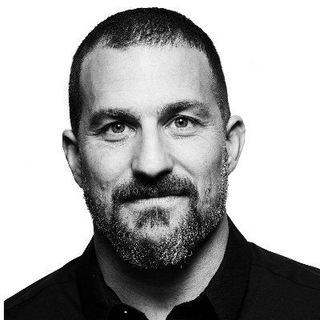
Andrew D. Huberman
Professor of Neurobiology & Ophthalmology at Stanford Medicine • Host of the Huberman Lab podcast • Focused on science & health research & public education
- 24 часа
- +3
- 7 дней
- –
- 30 дней
- +79
- Реакции
- 13
- Репосты
- –
- Комментарии
- –
Динамика подписчиков
Подписчиков у канала «Andrew D. Huberman»: 4 199. Прирост за последние 30 дней: 79 (1,9 %). Средний охват поста за сутки около 497, вовлечённость 11,8 %.
По дням, последние 30 дней
| Дата | Подписчики | Изменение | Посты | Ср. просмотры поста |
|---|---|---|---|---|
| 11 ноя | 4 199 | +3 | 0 | – |
| 10 ноя | 4 196 | +7 | 0 | – |
| 9 ноя | 4 189 | +2 | 0 | – |
| 8 ноя | 4 187 | +66 | 1 | 643 |
| 13 окт | 4 121 | – | 0 | – |
Просмотры по возрасту поста
Средние просмотры в каждом возрасте, посты за последние 30 дней.
- 7 дней
- 910
Когда публикует
Время по UTC. 20 постов за 90 дней.
Последние посты
-
The most important time to brush your teeth: - If you only brush and floss once in 24 hours, do it at night before sleep - Most people do the opposite: full routine in the morning, then dinner, dessert, work, and passing out without touching their teeth - At night you produce far less saliva, so nothing is there to fight the acid - Strep mutans feed on leftover sugar and use acid as the weapon against your teeth - Every professional and all the data still point to twice per 24 hours, perhaps three
-
How to actually remember what you read: - Read the material once - book, chapter, research article, doesn't matter - Step away from it. Walk, close your eyes, leave them open - Try to replicate the information from scratch, as if teaching a class without your notes - Go back to the material, check what you missed, make a note - Highlighting and underlining are motor commands. They bring you back to a page, they don't build the memory - Expect it to be mentally taxing. That's the tradeoff - it's fast and you don't forget
-
Heavy cannabis use quadruples psychosis risk: - Heavy use means more frequent than twice per week - It has been associated with 4 times the risk of psychosis later in life, in particular schizophrenia and bipolar-like episodes - Bipolar disorder is 30 times more likely if a first relative has it - Using cannabis through adolescence and up to age 25 creates 4 times the psychosis risk in those predisposed - The more potent the THC, the higher the probability of psychosis, a major depressive episode or a major anxiety disorder later in life
-
The workout your gym routine is missing: Dr. Tommy Wood at the University of Washington published a paper on proprioception and staving off late onset dementia and Parkinson's. Proprioception is knowing where you are in space and correcting - you feel yourself falling left so you move right. A hack squat on a machine gives you none of it. Being outside does: uneven ground, your foot never landing in the same position, sights and smells coming in. So does sport, where you're reacting to the ball and your opponent. At least one session a week should challenge it.
-
How to focus like a high performer: - The high performers I know take walks and bike rides. None of them hold maximum focus all day - We learn best in 90 min bouts inside an ultradian cycle. The first one usually starts when you wake up - Don't expect to focus for the whole 90 min. The beginning and end flicker in and out - After a learning bout, take non-sleep deep rest or deliberate disengagement: walk, run, or sit and let your thoughts move. That accelerates plasticity
-
Neuroscientist Christof Koch explains how the ego and self centeredness are central to consciousness but that detaching from the self in Flow States or (in safe contexts) psychedelics, can allow temporary ego dissolution and profound experiences… but we inevitably return to ego.
-
The 5-minute breathing protocol that beat meditation: - Double inhale through the nose, then a long passive exhale to lungs empty - The second inhale snaps collapsed alveoli open so you offload more carbon dioxide - 5 minutes a day, the minimal effective dose, in over 100 subjects - Tested against sitting meditation, box breathing and cyclic hyperventilation - Cyclic sighing won on mood around the clock, not just during the practice - It also lowered resting heart rate and improved sleep on 24-hour tracking
-
How to see the strengths you are blind to: - Contact 10 to 20 people who know you well - family, friends, colleagues - Ask each one for a story about a specific time when you were at your best - Collect the stories and run pattern recognition on the common themes - Note what those situations shared so you can put yourself in them more often - Flip it: write 100 people who matter to you a story about when they were at their best Strengths that come naturally to you are the ones you assume are easy for everyone.
-
EMDR works but it's incomplete: - Erasing a trauma takes two steps: extinguish the old response, then relearn a new narrative and attach reward to the old event - EMDR taps into the first step only. Deliberate side to side eye movements reduce activation of the threat reflex while you retell the event - Standard retelling starts with a huge amplitude response that drops with each repeat. EMDR sneaks around the corner of that - Attaching reward requires high amplitude arousal, a feeling of victory. EMDR has no active component for that Many people get great relief from it. On its own it is not the whole therapy.
-
Most of your hydration should come from food: - Watermelon is 95+% water - high in sugar by percentage but almost exclusively water - Meat is a high percentage of fluid too, less the longer you cook it - A biscuit is about 10% water - processed food is dehydrated and heavily salted - That combination leaves you under hydrated and over salted - Switch to mostly whole real food and your hydration skyrockets - Add salt back on that switch: salt your food to taste or use electrolytes
-
The 5-minute breathing protocol that beat meditation: - Double inhale through the nose, then a long passive exhale to lungs empty - The second inhale snaps collapsed alveoli open so you offload more carbon dioxide - 5 minutes a day, the minimal effective dose, in over 100 subjects - Tested against sitting meditation, box breathing and cyclic hyperventilation - Cyclic sighing won on mood around the clock, not just during the practice - It also lowered resting heart rate and improved sleep on 24-hour tracking
-
How to see the strengths you are blind to: - Contact 10 to 20 people who know you well - family, friends, colleagues - Ask each one for a story about a specific time when you were at your best - Collect the stories and run pattern recognition on the common themes - Note what those situations shared so you can put yourself in them more often - Flip it: write 100 people who matter to you a story about when they were at their best Strengths that come naturally to you are the ones you assume are easy for everyone.
-
EMDR works but it's incomplete: - Erasing a trauma takes two steps: extinguish the old response, then relearn a new narrative and attach reward to the old event - EMDR taps into the first step only. Deliberate side to side eye movements reduce activation of the threat reflex while you retell the event - Standard retelling starts with a huge amplitude response that drops with each repeat. EMDR sneaks around the corner of that - Attaching reward requires high amplitude arousal, a feeling of victory. EMDR has no active component for that Many people get great relief from it. On its own it is not the whole therapy.
-
Neuroscientist Christof Koch explains how the ego and self centeredness are central to consciousness but that detaching from the self in Flow States or (in safe contexts) psychedelics, can allow temporary ego dissolution and profound experiences… but we inevitably return to ego.
-
Money can't buy happiness but it can buy this: Once income passes a certain level relative to your cost of living, happiness stops scaling with it. Another $1,000 or $10,000 a year doesn't make your days better. What money does buy is a buffer against stress - specifically services. Help with cleaning, babysitting, a night nurse so you actually sleep while someone else handles the 3am wake-up. Money can't buy happiness. It can offset what's draining you.
-
How much salt you should actually eat per day: - 8 to 12 grams of salt a day, per the author of The Salt Fix - That works out to 3.2 to 4.8 grams of sodium, or 1.5 to 2 teaspoons - Current guidelines sit at 2.3 grams of sodium, so this is 1.5 to 2x that - Pair it with 4 grams of potassium a day - Add 400 mg of magnesium - many people are deficient - Barring pre-hypertension, hypertension, or other specific health issues
-
How to stop your kid from becoming entitled: - Say to yourself: just because I can doesn't mean I will - Bring them on boring errands even when a babysitter is home and you could drop them off first - In the airport don't let them duck under the lines leading to security - someone put those there for a reason - Have them fold the laundry on Sundays even if you have help who would do it - When they don't make the team wait two days before suggesting another tryout
-
The most powerful nootropic is stress: - Procrastination is self-imposed stress: the impending deadline, the concern of failure, the desire to do well - Acute stress plus a good night of sleep is the best smart drug you will ever find - The skill is turning the response off when you're done. Adrenaline crashes and your immune system crashes with it, which is why people get sick the moment they finally relax - Rule of thumb: when you can no longer get good sleep, you have moved from acute stress to chronic stress
-
How to get total focus on one project: - Dedicate all of yourself for that period, whether it's 20 min or 5 hrs, with no outside distraction - When you leave the work, do your best not to think about it - Don't bring materials with you. No works in progress to listen to during the day - Stay as far from it as possible when you're not directly engaging - Between sessions, fully engage project B, C or D instead of doing nothing Stewing over a problem is not how you solve it. Hold problems lightly.
-
The workout your gym routine is missing: Dr. Tommy Wood at the University of Washington published a paper on proprioception and staving off late onset dementia and Parkinson's. Proprioception is knowing where you are in space and correcting - you feel yourself falling left so you move right. A hack squat on a machine gives you none of it. Being outside does: uneven ground, your foot never landing in the same position, sights and smells coming in. So does sport, where you're reacting to the ball and your opponent. At least one session a week should challenge it.
Вопросы о канале «Andrew D. Huberman»
Сколько подписчиков у канала «Andrew D. Huberman»?
У канала «Andrew D. Huberman» (@andrewhuberman) 4 199 подписчиков на 12 ноября 2026 г.
Растёт ли канал «Andrew D. Huberman»?
Да. Прирост за последние 30 дней: 79 (1,9 %).
Сколько человек видят пост в канале «Andrew D. Huberman»?
Средний пост набирает около 500 просмотров за 24 часа, это примерно 12 % подписчиков (ERR).
О чём канал «Andrew D. Huberman»?
Канал в категории «Здоровье», язык постов: английский. Описание канала: «Professor of Neurobiology & Ophthalmology at Stanford Medicine • Host of the Huberman Lab podcast • Focused on science & health research & public education»
Какое место занимает канал «Andrew D. Huberman»?
По числу подписчиков: №222 в категории «Здоровье», №3 684 среди каналов на языке «английский», №4 257 в мире.
Публикует ли канал «Andrew D. Huberman» рекламу?
За последние 30 дней ни один из 20 постов не помечен как реклама (#ad, Sponsored, «Реклама»). Рекламу без пометки определить нельзя.
Когда публикует канал «Andrew D. Huberman»?
Пик публикаций: понедельник, около 17:00 по UTC. Выходит около 5 постов в неделю.
Статистика обновлена 18 минут назад.